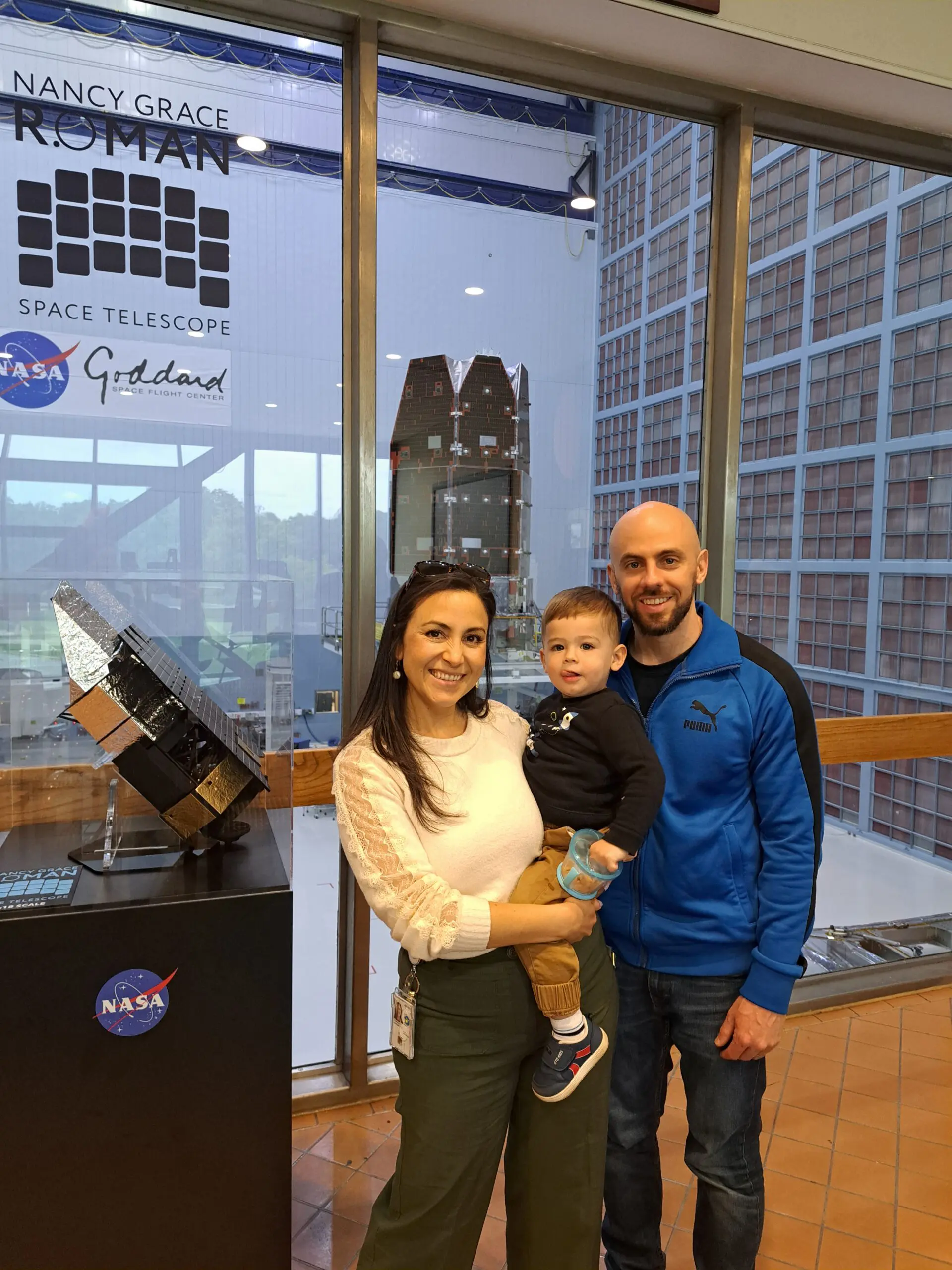

It’s World Space Week, a global celebration of space exploration!
In August, our Chats with Change Makers student host Luke had the opportunity to interview Margaret Dominguez, an optical engineer at NASA Goddard Space Flight Center in Maryland, about her work on the Nancy Grace Roman Space Telescope just before its launch into space on August 30!
Chats with Change Makers is designed to showcase real engineers and technicians to students in grades 4-12 and make real world connections to the engineering profession.
You can watch the full interview below, but here are some of our favorite bits!
Question: How does the Roman Space Telescope differentiate itself from past telescopes sent into space?
Answer: That’s a great question…So, we have multiple space telescopes within astrophysics that are trying to answer those important questions of the decade. So, the last decade was the James Webb Space Telescope, which it was about the size of a tennis court. It’s an infrared telescope that is also one million miles away from our planet. Before that, we had the Hubble Space Telescope, which we launched in 1990, it’s been out there for 36 years. It is a beautiful human marvel. But unlike Webb, that is a million miles away from our planet, Hubble is only about 350 miles away from our planet. So, it’s really, really close. It’s been orbiting our planet versus Webb and Roman that are going to be a million miles away and orbiting the sun along with our planet. So different distance, also different wavelengths. It’s looking at different colors of the light. Hubble is an ultraviolet visible telescope. Webb is infrared, and Roman will also be infrared with complementing capabilities to Hubble and Webb.
Question: It sounds like there’s a lot of different parts of the telescope. What is the main part that you focus on?
Answer: So, I actually built and tested one of the components of the Widefield Instrument called GRISM, a grading prism that is going to allow us to do slitless spectroscopy, which basically means…that every chemical element has a color associated with it. So sometimes we can look at a lamp, and we can see what the lamp is made of by looking at the colors of the light that come from the lamp. If we can look at the universe and get the different colors of the universe, we can figure out what chemical components make up the universe. So, you can imagine if we’re looking at a planet and we see that it has the same colors, the same chemical elements as our planet, we could speculate, could it have life like our planet does?

Margaret Dominguez Presenting RST

Margaret in Clean Room with RST
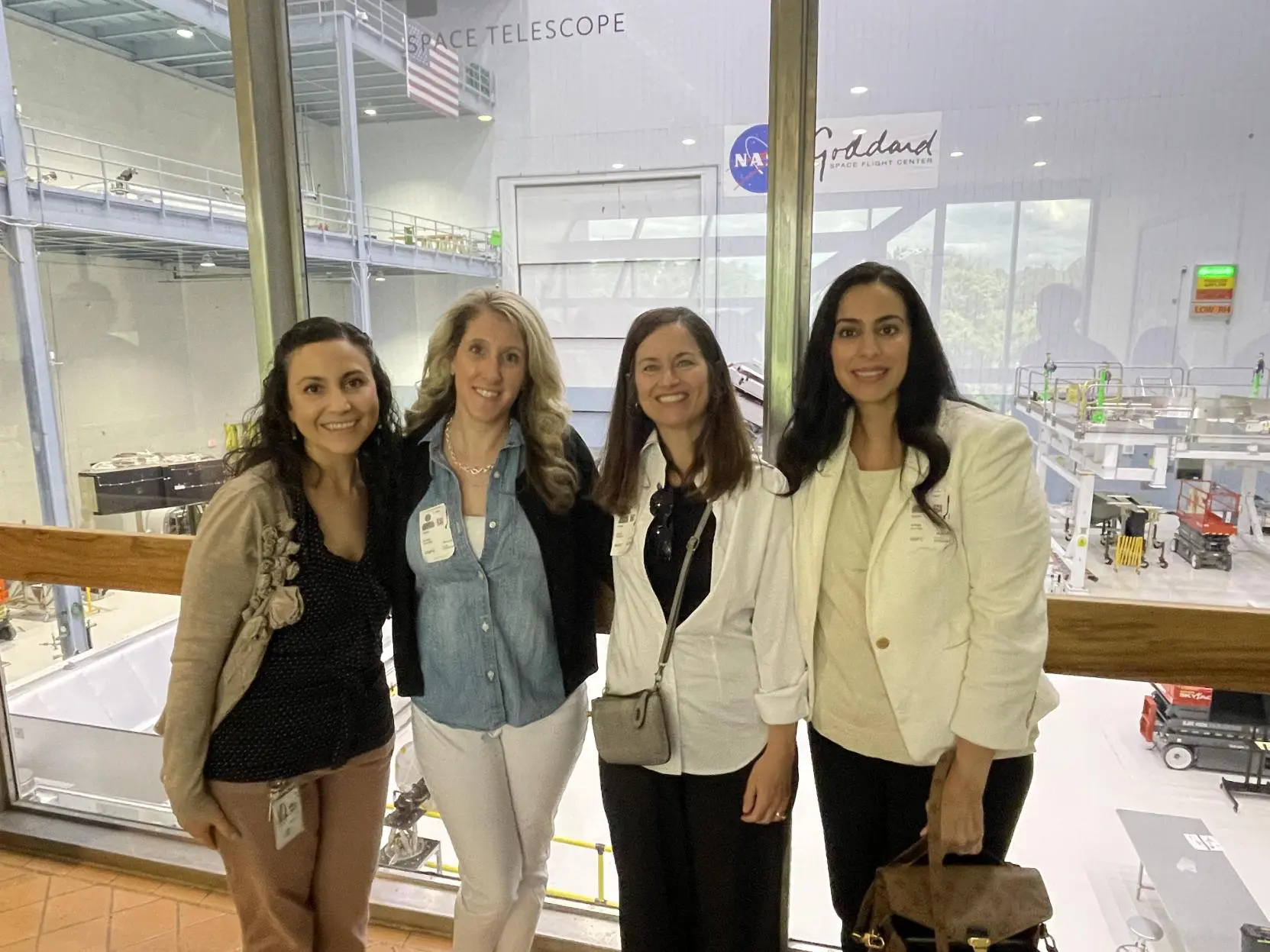
Margaret Introduces RST to DiscoverE Team
Question: So, what is one thing you like to do for fun outside of work?
Answer: I have a two-year-old, so I spend a lot of time talking to him. I only speak to him in Spanish. My goal is that he will be bilingual like I am. So I spend a lot of time doing that and just planning activities for him. I love to do outreach, connecting to students, you know, be a mentor whenever possible. That’s really important to me…When I got married to my husband, who’s also a NASA optical engineer (His office is right behind me in another building.) We got married and we had a science demo as part of our wedding because I was like, we need to do a science demo because we love this. So, I love to do outreach. and I try to do it wherever I can as often as I can.
Question: What is something you’ve done in your life that you’re really proud of?
Answer: The GRISM, even though we haven’t launched it yet, we have high confidence that it’s going to work. I will be there at the launch pad in Cape Canaveral watching it takeaway. We expect to get the first images from the telescope by December, so the end of the year. and I’m really, really hopeful that this thing that I helped build over ten years does what it’s supposed to do.
UPDATE: The Roman Space Telescope was launched successfully on August 30 and Margaret was in attendance!

Margaret Attends RST Launch
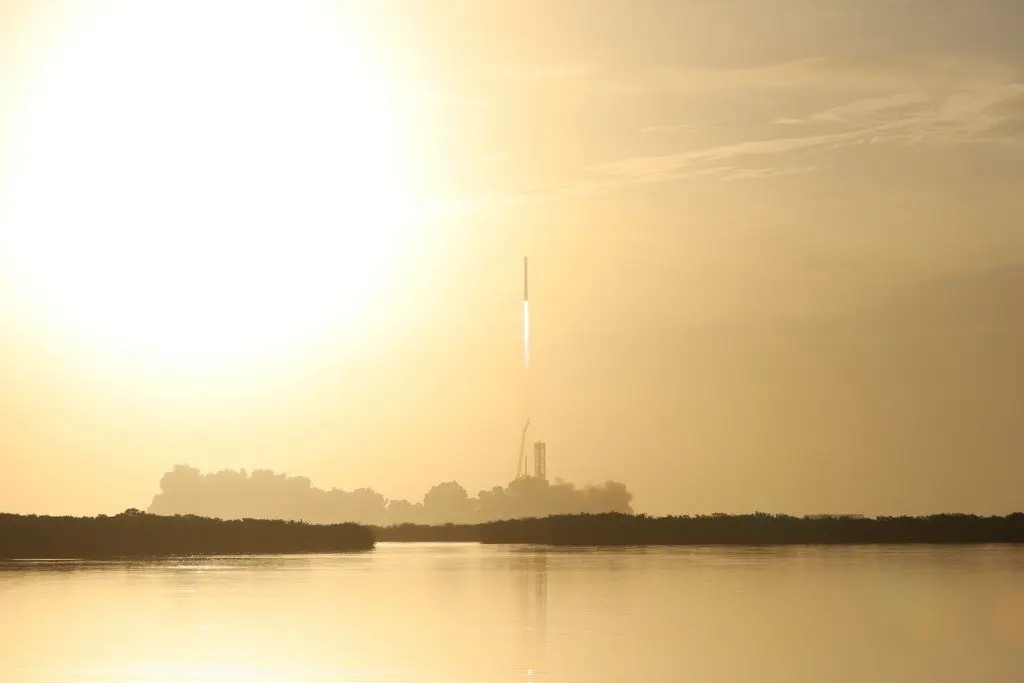
RST Launch at Cape Canaveral